
AI-Powered HRMS Software for Enterprises: Payroll, Attendance and Performance in One Platform
TankhaPay HRMS software runs payroll, attendance, compliance and people operations across your Indian headquarters and international teams, with one employee record and one view for leadership.
- Multi-entity payroll
- Multi-jurisdiction compliance
- Multi-currency payroll integration
- Consolidated global reporting


See TankhaPay on your own structure
Two quick steps. A specialist responds within 24 hours.
🔒 Your data stays private and is never shared.
- 1,000+Businesses on TankhaPay
- 2M+Employees served
- 26+Years in HR and payroll
- 10+Countries of presence
Trusted by 1,000+ organisations, from government bodies to fast-growing global brands









































What does TankhaPay's global HRMS look like?
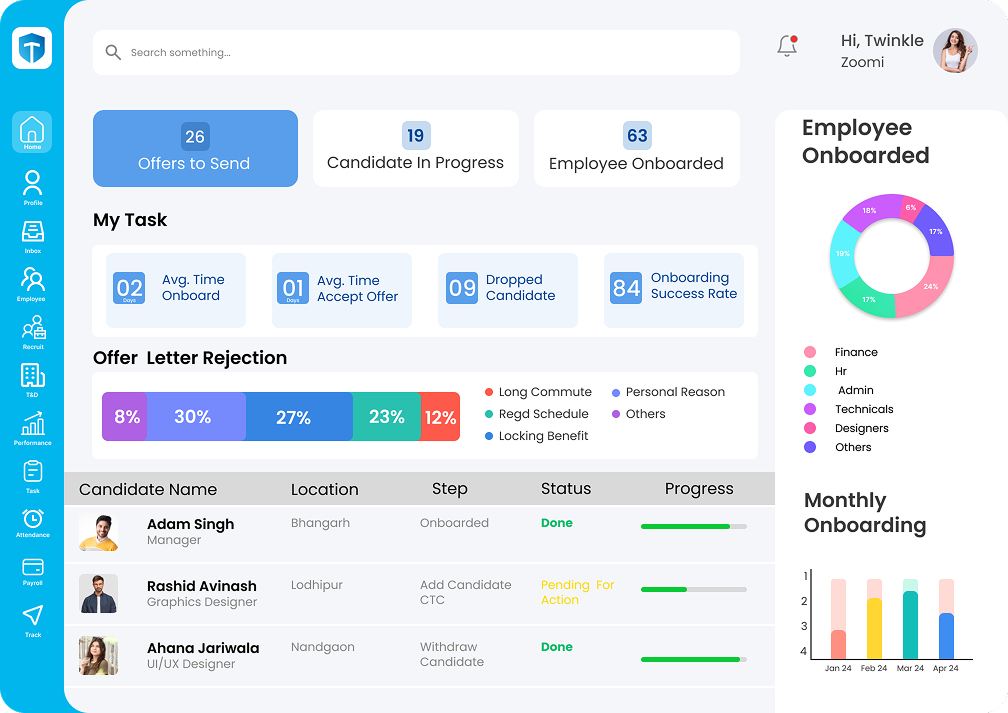
One clean workspace where payroll, attendance and people data meet. HR teams, managers and employees each see exactly what they need, on the web and on mobile.
What makes TankhaPay a global HRMS?
TankhaPay runs every entity, country and employee on one platform, with the compliance depth of 26 years in Indian HR and payroll. Leadership sees one consolidated picture, while each entity keeps its own rules, currency and statutory obligations.
Mass multi-entity payroll
Attendance, leave and salary structure information from all entities is directly integrated into payroll processing without any reconciliation of separate systems.
Jurisdiction-specific compliance:
International equivalents Labour Codes across 10+ countries are applied per jurisdiction, inside the workflow.
Multi-currency payroll integration
From Indian headquarters to subsidiaries abroad, payroll integrates across currencies with consolidated workforce reporting for leadership.
One employee experience everywhere
A mobile-first, multi-language self-service platform your global workforce uses without training, across roles, locations, and seniority.
How does TankhaPay's global HRMS work day to day?
Pick an area to see how it works in TankhaPay. Every area shares one employee record, so a change in attendance or an approval reaches payroll without re-entry.
Run payroll for every entity from one screen
Salary, statutory deductions and payslips for every entity and state, calculated from the same attendance and leave data.
- PF, ESIC, TDS, PT and LWF calculated automatically across all 28 states
- Multi-entity payroll runs with no reconciliation between systems
- Multi-currency payroll integration for teams outside India
- Payslips on mobile for every employee
Attendance you can trust, from any site
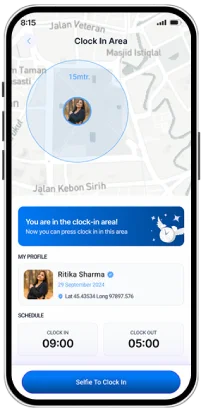
Staff clock in from the right place, as the right person, and every approved hour flows into payroll.
- Geofenced mobile attendance with multiple zones per employee
- Face-verified selfie check-in and biometric device sync
- Works offline, syncing when the connection returns
- Live dashboard of on-time, late and absent staff
Rosters, shifts and breaks without spreadsheets
Arrange shifts and rosters for each site, schedule rotational shifts and night shifts and have the system calculate hours, breaks and overtime accordingly.
- Shift and roster management per location
- Paid and unpaid breaks defined per shift
- Overtime and shift differentials calculated for payroll
- Multi-vendor workforce: contract staff tagged to their vendor
Hire and onboard in one connected flow
From job posting to offer letter to day one, every candidate moves through a single pipeline.
- Job posting and candidate pipeline with stages
- Offer letters generated from templates
- Digital onboarding that creates the employee record
- Hiring dashboard for recruiters and managers
Reviews that run on data, not memory
Set goals, run appraisal cycles and calibrate ratings with every review in one place.
- KPIs and goal setting cascaded across teams
- 360° feedback and appraisal cycles
- Rating calibration built into the review
- Review summaries for employees and managers
Approval chains that match your organisation
Leave, regularisation, overtime and expenses move through each level on their own, with a full audit trail.
- Multi-level approvals by team, location or role
- Expense claims approved and paid through payroll
- Approve from mobile with instant alerts
- Audit trail of who approved what, and when
One consolidated view for leadership
Headcount, attrition, cost and compliance status across every entity, updated in real time.
- Consolidated workforce reporting across entities
- Headcount and attrition by function and location
- Compliance status at a glance
- Export-ready reports for finance and audit
Everything employees need, in their pocket
Payslips, leave, attendance fixes and HR requests on a mobile-first, multi-language app, so HR stops fielding routine questions.
- Payslips and tax documents on demand
- Leave balances and one-tap applications
- Attendance regularisation from the phone
- HR requests and documents in one place
Which HR modules does TankhaPay's global HRMS include?
All modules will cover the entire employee lifecycle and will integrate with the payroll and compliance in one database. Choose any module and you can view the dedicated page.
- PayrollAutomated pay with PF, ESIC, TDS and PT, covering all 28 states with complex Indian payroll and multiple entity processing.Explore payroll software →
- Employee managementMultiple entity organization structure, role based access, audit trail, and centralized document management.Explore employee management →
- AttendanceBiometric integration, geo-fencing mobile punch-in/out, work from home and shift management integrated with payroll.Explore attendance management →
- Leave managementLeave management policy-based, multi-level approval system, auto-balance and payroll integration.Explore leave management →
- Employee self-serviceA mobile-first, multi-language self-service platform for payslips, leave, documents and HR requests, anywhere.Explore employee self-service →
- Applicant trackingJob posting, candidate pipeline, offer letters and digital onboarding in one connected flow.Explore applicant tracking system →
- Performance managementKey performance indicators, objectives, 360° feedback, cycle and ratings calibration for each appraisal.Explore performance management →
- TimesheetsProject based timesheets, client billable hours, overtime management and payroll integrated timesheets.Explore timesheet management →
- HR policiesDigitise, version-control and distribute HR policies, with employee acknowledgement tracking built in.Explore hR policy management →
- Expense managementEmployee expense claims, multi-level approvals and reimbursements that flow into payroll.Explore expense management →
- Asset managementTrack laptops, devices and company assets assigned to each employee.Explore asset management →
- Visitor managementDigital visitor registration, badge printing, host notifications and visitor history from one dashboard.Explore visitor management →
Why does HR slow down as you add entities and countries?
Every new entity brings its own tools, vendors and rules. Switch the view to see what changes when they all run on one platform.
 One platform
- No single workforce view
- Compliance gaps by country
- HR and ERP out of sync
- Manual payroll consolidation
- No real-time workforce data
- Uneven employee experience
- Scattered performance reviews
- Data privacy exposure
Which TankhaPay setup fits your organisation?
Answer three quick questions and get a recommended starting setup. It takes under a minute, and you can bring the result to your strategy call.
Question 1 of 3
How many employees do you have?
Question 2 of 3
Where does your workforce sit?
Question 3 of 3
What matters most right now?
How much is manual HR work costing you each year?
Move the sliders to match your organisation and see the time and money manual HR work takes. Every number is based on your own inputs, including how much you expect to automate.
Full-time roles assume 160 working hours a month. This is an estimate built on your inputs, not a promise. On the strategy call we can work it out against your real payroll and attendance data.
Does TankhaPay connect with your existing tech stack?
Certainly. TankhaPay supports integration with SAP, Oracle, and more than 50 other HR and financial software through a secure and documented API. Click on any point on the map to see connections.
ERP and accounting
Built-in connectors keep employee, attendance and payroll data in sync with the ERP and accounts you already run.
- SAP
- Oracle HCM
- NetSuite
- Tally
- QuickBooks
Payments
Pay and reimbursements get linked to your payment rail, so once your payroll is approved, payments are made directly.
- Razorpay
Collaboration
Leave approvals, payslips and reminders reach people in the chat and workspace tools they use every day.
- Slack
- MS Teams
- Google Workspace
HR and CRM
Employee records stay consistent with the other HR and business systems your teams rely on.
- Zoho People
- Salesforce
Attendance hardware
Biometric and facial recognition devices feed attendance straight into payroll, with no monthly exports.
- Biometric devices
- Face recognition terminals
Open API
A secure, documented API connects anything not on the built-in list, set up by our implementation team.
- Custom API
- 50+ platforms
What do organisations say about TankhaPay?
From Meesho to growing manufacturers and foundations, teams talk about accurate payroll, easy attendance and a team that answers. Pick a company to read their words.
We would like to thank you wholeheartedly for your exceptional performance. Your commendable efforts have made us achieve our goals on time and we are thoroughly satisfied with your performance. It is our pleasure to thank you for maintaining high standards all along.

“We use TankhaPay HRMS for everything from employee management and attendance to payroll and compliance.”
CRG InfratechSantosh Dhangapure“Accuracy is what we value most. We use TankhaPay HRMS for employee management, attendance, payroll and compliance, with mobile check-in, biometric, face check and geo-fencing all running on it, and the time we spend on manual work has dropped noticeably.”
 Larren SquareAnna
“Attendance management on TankhaPay HRMS is easy to use, the support is excellent, and it has saved us a good deal of time and effort.”
 Southern SagesKarthik
“TankhaPay HRMS has made payroll processing and compliance reporting simple for us, with far less manual input than before.”
 Dipole ServicesPraveen
“Attendance and payroll are easy to manage on TankhaPay HRMS, and the platform now handles much of what we used to do manually.”
 Cleanverse GlobalRitu Sharma
“TankhaPay HRMS runs our employee management, attendance and payroll. It is easy to use, the support is excellent, and it has taken a lot of routine work off the team.”
 Aircon EngineersManjeet Singh
“What we like most about TankhaPay is the staff behaviour and service. We use TankhaPay HRMS for payroll processing and compliance, and it has freed us from a lot of repetitive work.”
 ArtocitiSaket Prasun
“Attendance management on TankhaPay HRMS has taken a big chunk of manual effort off our plate.”
 Seternity SolutionsRinky Soni
“The software and services are really good, and the team has been very helpful whenever I needed assistance.”
 Power PartnerPriya
“We find the staff exceptionally supportive and cooperative. Everything has been excellent, and we are very satisfied with the services provided.”
 VSS BuildconVarun Srivastav, CEO
“The software has made our salary processing smooth, accurate and hassle-free, saving us significant time every month.”
 Rahat InfotechSuneel Bhardwaj & Associates
“The system is simple to use, and whenever we've had issues or questions, the support team has been quick to help.”
 AbodeatabTeam Abode
“From the start, the team was helpful, patient and knowledgeable. They took the time to explain the product, guide me through setup and troubleshoot issues.”
 Goal BinduKajal Kusua, HR Manager
“The responsiveness and dedication make a real difference to how smoothly things run for us.”
 CredilabsAvneesh Soni
Which industries use TankhaPay's global HRMS?
TankhaPay is configured for the compliance and workforce patterns of each sector. Choose your industry to see how the platform fits.
 ManufacturingCompliance, Change Management, and OutsourcingSee how it fits →
 IT and softwareGlobal Projects, Timesheeting, and BillingSee how it fits →
 BFSIAudit Trails, Secure AccessSee how it fits →
 LogisticsOn-Site Employee Management, Geofencing, Payroll in Multiple LocationsSee how it fits →
 Enterprise and MNCMulti-entity Payroll, ReportingSee how it fits →
 HealthcareShift Scheduling with Rotating PatternsSee how it fits →
 RetailStore rosters, high turnover and fast onboardingSee how it fits →
 StartupsFrom Hiring the First Employee to the First SubsidiarySee how it fits →
 ConstructionAttendance at sites and contractors' workforceSee how it fits →
 EducationFaculty, staff and campus payrollSee how it fits →
 HospitalityShift work, service employees and seasonal hiringSee how it fits →
 Professional servicesBillable time and timesheets by clientSee how it fits →
Is there country-specific HR software from TankhaPay?
Yes. Country pages show how TankhaPay handles local payroll and labour rules. Each one covers the compliance your entity in that country runs on.
Is TankhaPay secure enough for global HR data?
Yes. TankhaPay is run by Akal Information Systems, appraised at CMMI Maturity Level 5 and certified to ISO 27001, 9001, 20000 and 14001. Employee and salary data is protected at every step.
- Encrypted end to endData is encrypted both while being stored and transmitted
- Role-based accessIndividuals have access only to what their roles allow
- DPDP Act 2023Designed to be fully compliant with the Indian data protection act
- Full audit trailAll Approvals and Modifications Recorded
- Most Innovative HRMS AwardUBS HR Tech, 2025
- Award for Outstanding HR Technology Implementation Team of the YearHR Tech Conclave, 2025
- Award for Best Payroll & Compliance Solution ProviderUBS HR Tech Summit, 2026
How do you select the best HR software for your business?
Use this five-step framework that enterprise HR leaders and CIOs follow when shortlisting HRMS platforms. Each step maps to a common failure point in the selection process.
Map out your compliance needs first:
Write down all the states where your company employs people, determine the PT slabs, find out whether you need to register under EPFO and ESIC, and what Labour Code 2025 says – before assessing any system. Fixing compliance holes found after the fact is more expensive than HRMS.
Find out how deep the modules go, not just how many there are:
Payroll, attendance, leaves, performance appraisals, and recruitment must be native modules in the same database, not third-party modules bolted on. Weakly integrated modules result in reconciliations and payroll issues.
Check integration feasibility with your current stack:
Map out your ERP, finance, and biometric systems before approaching vendors. Request a working demo of integration rather than slides. SAP, Oracle HCM, Tally, and biometric product compatibility are the most frequent obstacles to enterprise adoption.
Ask for live client references in your industry
Request references from organisations in your industry with comparable headcount and compliance complexity, not just any customer. A manufacturing client reference is not useful due diligence for a BFSI firm with multi-jurisdiction compliance requirements.
Before you sign off, ensure validation of certifications in terms of data security:
ISO 27001 and CMMI Level 5 are the absolute minimum certifications that should be held by an enterprise for dealing with their employees’ data. Provide your appraisal ID of CMMI and number of ISO certificate for validation.
What should you read before choosing a global HRMS?
Editions from our HR Basics newsletter and guides from the TankhaPay blog. Each one covers a question HR and finance leaders ask while evaluating HR technology.
 HR tech · HR BasicsWhat Should Growing Indian Businesses Really Look for in an HRMS in 2026?
 HR tech · HR BasicsBillions Spent on HR Tech. So Why Are HR Leaders Still Struggling?
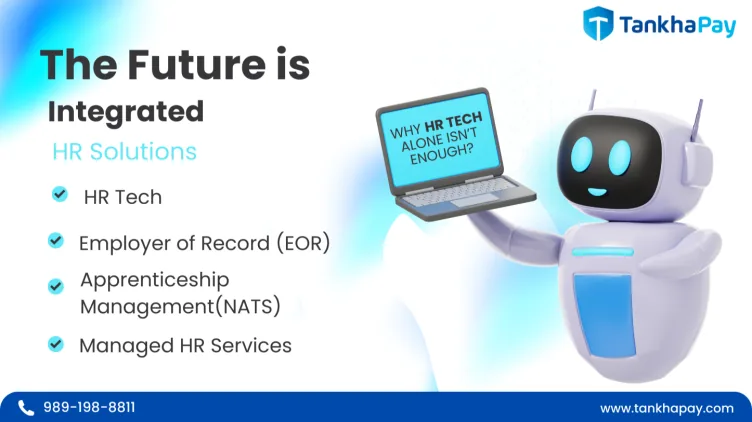 HR tech · HR BasicsWhy HR Tech Alone Isn't Enough: The Future Is Integrated HR Solutions
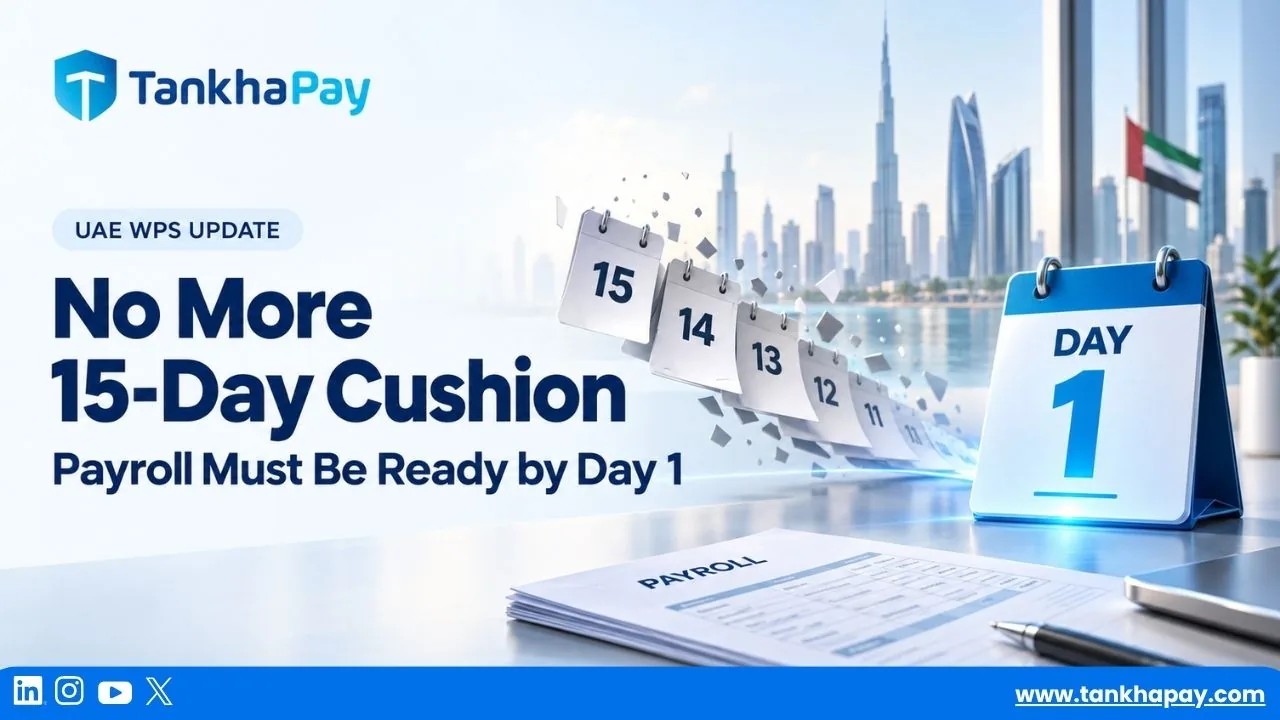 Global payroll · HR BasicsThe UAE Removed the 15-Day WPS Cushion. Now Payroll Has to Be Ready by Day 1.
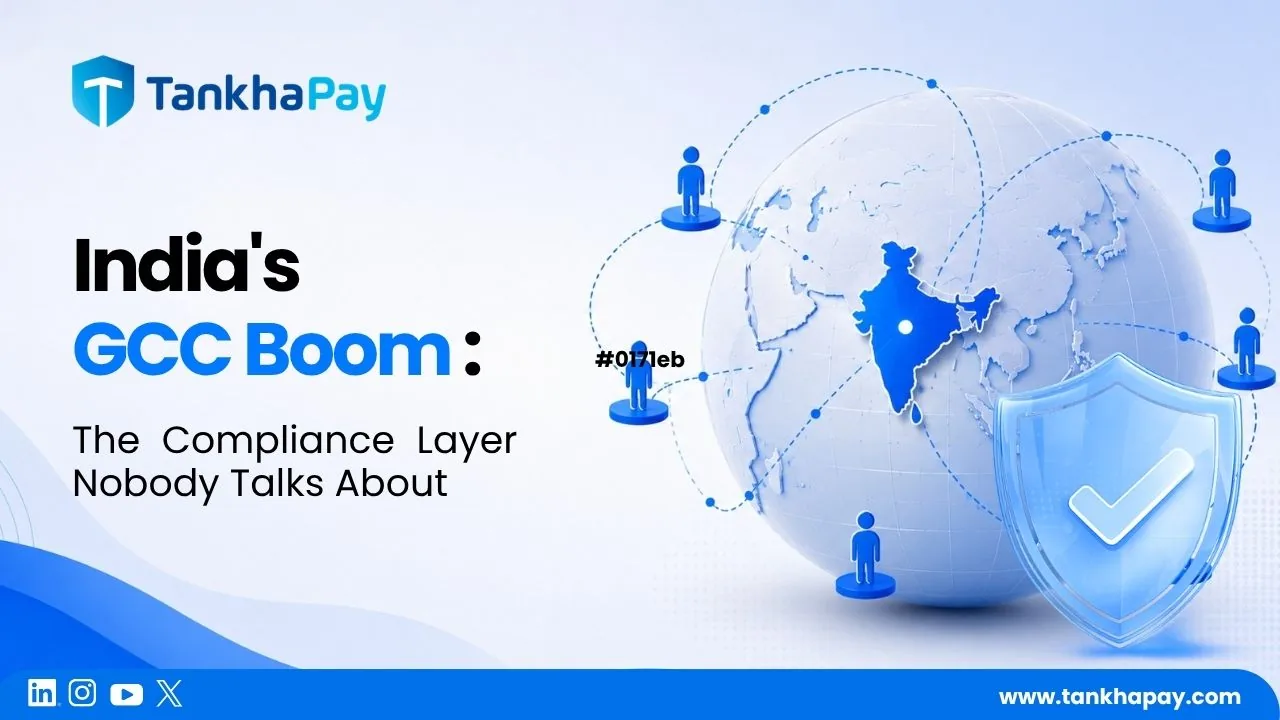 GCC setup · HR BasicsIndia's GCC Boom Is Real. The Compliance Behind It Is Not Simple.
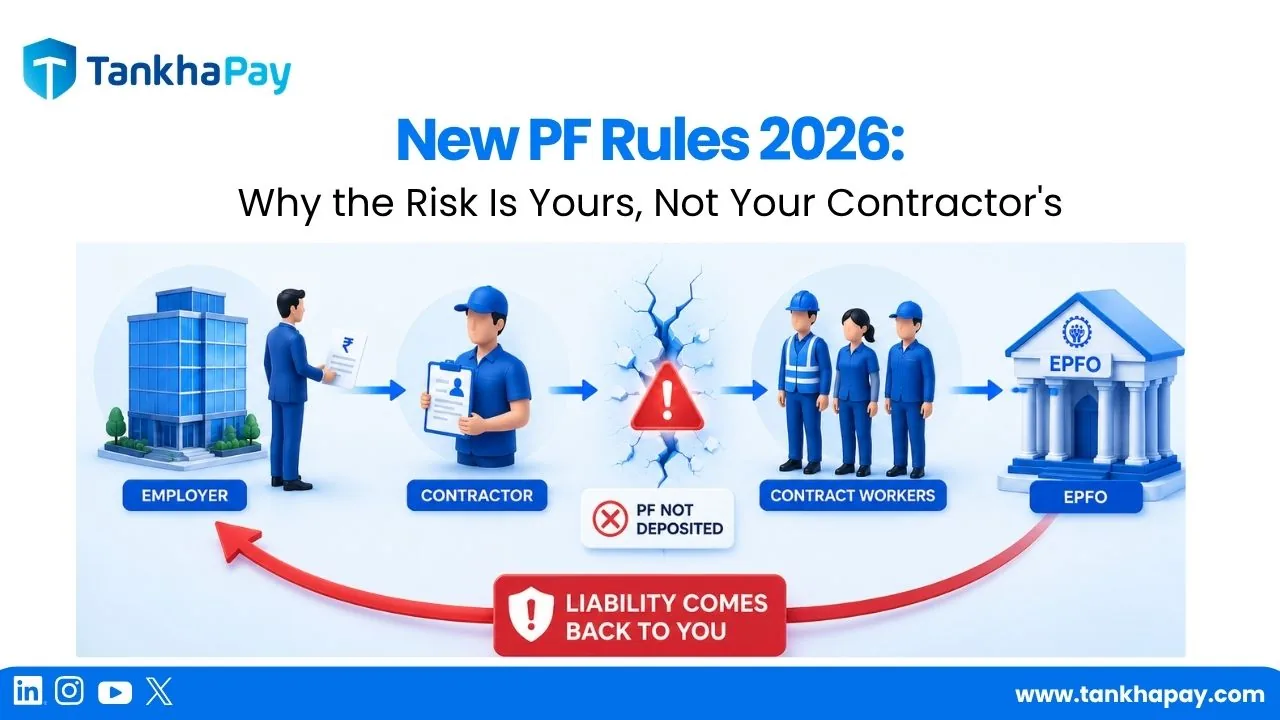 Compliance · HR BasicsNew PF Rules 2026: Why the Risk Is Yours, Not Your Contractor's
What do buyers ask about TankhaPay's global HRMS?
Answers to the questions HR, finance and IT teams ask most. Anything else, ask us on the strategy call.
TankhaPay HR Software includes Payroll, Employee Management, Attendance, Leave Management, Employee Self-Service, Applicant Tracking, Performance Management, Timesheet, HR Policies, Expense Management, Asset Management, Visitor Management, Survey Software, Feedback Management, Broadcast & Announcements, and more, all in one platform with no separate integrations required.
The HR management software and the payroll are created on a common platform and do not integrate via an API. The attendance records, deduction records, and the salary structure data all feed into payroll processing with just one click.
Yes, TankhaPay does support biometric device synchronization, geo-fencing based mobile sign-in, WFH tagging, and scheduling shifts. It is possible to manage multiple locations and hybrid teams using one dashboard, with location-based shift rules.
Of course yes, TankhaPay has been fully updated with the four Labour Codes from November 2025. The system incorporates the provisions for 50% basic pay under the Social Security Code, the new leave policy, and electronic registers of establishments. All compliance requirements are automatically configured.
The ESS portal gives users the facility to get payslips, see their attendance record, apply for leaves, download files, update personal information, and make requests to HR without having to reach out to HR staff members. It is accessible via web as well as a mobile application (Android & iOS). Our clients have reported that their 60–70% HR enquiries get reduced during the first three months of usage.
Yes. TankhaPay integrates with all major biometric device brands – ZKTeco, eSSL, Realtime, Hikvision, Mantra, and others – through direct API or file-based sync. Punch data flows automatically into the attendance module and payroll calculations. No manual data entry from biometric logs.
There are many international HRMS systems that require costly and time-consuming implementation processes, and continuous localization for Indian compliance. The global HRMS system of TankhaPay is inherently designed to function across multiple jurisdictions; Indian statutory compliance (PF, ESIC, PT, and Labour Codes 2025), as well as other international aspects, are inherent in the system right from the start. HR and payroll management work using one platform, thus avoiding unnecessary integrations.
HRIS (Human Resource Information System) handles employee records and basic data storage. HRMS (Human Resource Management System) adds workflow automation, compliance, payroll, and attendance management on top of that. HCM (Human Capital Management) extends further into strategic talent management, learning, and workforce planning. TankhaPay operates as a full HCM platform, covering all three layers from core records through compliance and into performance and talent management, in one connected system.
Definitely, for the majority of Indian companies. The cloud HRMS gets its updates automatically whenever there is any change in contribution rates in PF by EPFO, wage limits in ESIC, or the Labour Codes 2025 comes into force in a new state. The on-premise HR solution requires you to update it manually via your IT team; hence, it leads to a delay in compliance which is always associated with penalty risks.
The price of HR software in India varies between INR 50 and INR 500 per month per user based on the number of modules you need and the company size. The basic software for attendance and leave is located at the lower end of this scale, while full-fledged HRMS which includes payroll, statutory, performance management, ATS, and analytics, are in the middle to higher bracket. TankhaPay's prices vary based on your organization size and modules needed.
The typical time taken to implement TankhaPay HRMS is 4 to 8 weeks for midsize organizations (organizations with 500 to 2,000 employees). Enterprise implementations with ERP integration, legacy migration, multiple organization structures, or multi-national employee requirements require 12 to 16 weeks of implementation period. TankhaPay ensures that a separate implementation team and project manager are assigned for each implementation process.
Yes, TankhaPay has biometric attendance for office employees, GPS & geo-fence check-in for field and site employees, and WFH for remote employees on the same dashboard with payroll integration. This solution is implemented for TankhaPay’s manufacturing, construction, logistics, and retail customers in different locations and states.
The manufacturing firms operating in India require HR software that supports shift management, multi-site attendance with biometric support, CLRA compliant contractual employees and payroll for each location with correct minimum wages and professional tax. TankhaPay provides support for all these features. Visit the TankhaPay Manufacturing HR Software page for more information on modules and compliance supported. Visit the TankhaPay Manufacturing HR Software page for detailed module and compliance coverage.
TankhaPay's primary differentiators against Keka, greytHR, and Darwinbox are: CMMI Maturity Level 5 (held by fewer than 1% of Indian tech companies), ISO 27001 certified infrastructure, 26 years of India statutory compliance depth with Labour Codes 2025 built in, and an integrated Employer of Record (EOR) service for international workforce management that none of these competitors offer in-house. TankhaPay also provides managed payroll outsourcing alongside the software platform, giving enterprises a single vendor for both technology and compliance operations.
Personal data belonging to residents of India (including those of the employees) shall be subject to the provisions of the Digital Personal Data Protection Act 2023 (DPDP Act). These provisions include the necessity of consent for processing, data localization, and notification of any breach of data within 72 hours. The ISO 27001-certified infrastructure of TankhaPay involves encrypted storage of employee data, role-based access with full audit logging, logging of consent for processing of employee data, and breach handling in accordance with DPDP Act.
See TankhaPay's global HRMS running on your structure
A senior product expert walks you through the platform, configured for your entities, countries and compliance requirements.
- No commitment required
- Response within 24 hours
- CMMI Level 5 appraised
- 26+ years of expertise